


- You have no items in your shopping cart
- Subtotal: රු0.00
 ceylon matcha
Posted on
ceylon matcha
Posted on
The first signs of the coffee rust were observed in 1869, by which time James Taylor’s
first commercial plot of tea was already in existence. James Taylor is acknowledged as
the father of the Tea Industry in Ceylon (Sri Lanka now) and it is only fitting that he is
given due recognition in this study.
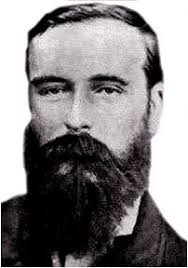
He was born in 1835 in a cottage, “Moss Park” in Monboddo Estate near Laurence Kirk
in Kincardineshire in Scotland. He came to Ceylon in 1852 along with the Blacklaws and
was initially cared for by the Mackwood Family, who were already firmly established in
this colonial outpost. Plantation colossus, R. B. Tytler, who maintained a close liaison
with the Laurence Kirk Parish in Scotland, was instrumental in bringing Young Taylor to
Ceylon, as well scores of other Scottish immigrants of “good stock” who were
traditionally in the farming business.
Taylor worked as a planter, first on Naranghena Estate and very shortly moved to Waloya
Division of Loolecondera estate, Hewaheta, a new coffee estate owned by J.J. McKenzie.
Although ownership of the estate changed hands, (Anglo Ceylon and General Estates Co)
he remained on it until his death in 1892.
He was reclusive by nature and rough hewn, gauche and uncomfortable in the company
of the opposite sex and died a bachelor. Nevertheless his contribution to the development
of the Tea Industry is almost without parallel. A workaholic with an enquiring scientific
mind he wrote and published results of his work and experiments in the journals of those
pioneer days. Legend also has it that he was the biggest and strongest man in the land at
the time and one whose brain was not second to his brawn. It took a dozen men two days
to carry his body down to the Kandy (Maiyawa) cemetery for burial.
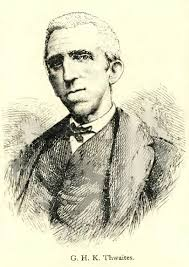
Although Taylor is credited as the father of the tea industry, it is a little known fact that it
was H. K. Thwaites, the curator of the Kandy (Peradeniya) Botanical Gardens, who gave
him the first tea seeds of the Assam variety and encouraged him to plant them.
Unfortunately his place in the sun has been overshadowed by succeeding events.
In 1872 the first break of Ceylon tea was exported. It consisted of 2 small packs
containing 23 lbs of tea from Loolecondera estate and was sold for Rs. 58.00 (valued at
3.s. 9.d., per lb)
New coffee plantations continued to develop even in the 1880’s in certain districts, but
the inexorable advance of the coffee rust sent alarm bells ringing in the minds of the more
perspicacious planters who then turned to tea as a replacement crop.
With typical vigour these planters soon had tea plantations going where the coffee had
been. Although there was an initial lack of expertise in this new crop, the vast experience
gained by their Indian counterparts was freely given to the Ceylon tea planters, who
proved apt students.
The results achieved by these first tea estates did not pass unnoticed, and the
transformation of coffee plantations into tea gained momentum.