

- You have no items in your shopping cart
- Subtotal: රු0.00
 ceylon matcha
Posted on
ceylon matcha
Posted on
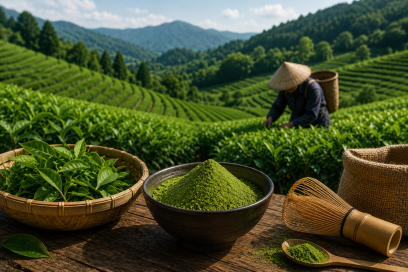
Matcha made its way to Japan in the late 12th century, brought by a Zen Buddhist monk named Eisai, who had traveled to China on a spiritual pilgrimage. Along with new insights into Zen philosophy, he returned with tea seeds, which he planted on Mount Sefuri. Eisai also shared these seeds with another monk, Myoue Shounin, who cultivated them near a temple in the Uji region — a place that would go on to become world-famous for producing the finest matcha in Japan.
Uji’s unique climate, fertile soil, and skilled tea farmers created the perfect environment for cultivating premium matcha. To this day, Uji matcha is considered the gold standard for quality.
Eisai is credited with introducing the Song Dynasty’s powdered tea preparation method to Japan — where tea is ground into a fine powder and whisked with hot water using a bamboo whisk. This method is almost identical to how we prepare matcha today. It quickly gained popularity, especially among Zen Buddhist monks, who appreciated matcha’s ability to calm the mind while sharpening focus — a perfect companion for meditation.
Eisai personally experienced these benefits and wrote about them in his influential book, “Kissa Yojoki” (Drinking Tea for Health). In it, he described how matcha supported mental clarity, health, and longevity. His teachings caught the attention of Japan’s samurai class, who began drinking matcha to maintain composure and focus before battle.
As time went on, matcha became central to the Japanese tea ceremony, or chanoyu. During the 15th and 16th centuries, tea masters like Murata Jukō and Sen no Rikyū transformed tea drinking into a meditative art form — rooted in simplicity, humility, and mindfulness. Thanks to their legacy, matcha evolved beyond a drink — it became a spiritual and cultural ritual that continues to thrive today.